

How AI Helps Special Educators Keep Up During IEP-Heavy Months
Top 3 Key Takeaways
- AI reduces IEP workload by automating data collection, progress monitoring, and reporting, giving special educators more time for instruction.
- Diagnostic platforms like Let’s Go Learn provide IEP-ready data instantly, aligning assessment results directly to goals and present levels.
- AI-powered personalization ensures that students receive targeted instruction, helping teachers manage diverse needs even during the busiest months.
How AI Helps Special Educators Keep Up During IEP-Heavy Months
IEP season can feel relentless. Between drafting present levels, aligning goals, collecting progress data, and communicating with families, special educators often face an unsustainable workload. According to the U.S. Department of Education, special education teachers spend a significant portion of their time on compliance and documentation rather than on direct instruction (https://sites.ed.gov/idea/).
This is where AI comes in: not as a replacement for teachers, but as a powerful support system that streamlines the most time-consuming tasks.
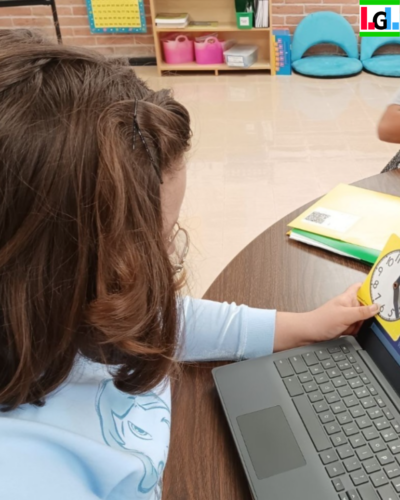
Let's Go Learn's diagnostic assessments
With Let’s Go Learn, you can create personalized instruction that inspires success for each learner, as you differentiate curriculum for intervention, remediation, and enrichment.
The Challenge: IEPs Demand Precision and Time
IEPs require detailed, data-backed insights into each student’s performance. Teachers must:
- Establish present levels of academic achievement (PLAAFP)
- Write measurable annual goals
- Track ongoing progress
- Adjust instruction based on data
Traditionally, this process involves pulling data from multiple sources, manually analyzing it, and translating it into compliant language. That is a heavy lift, especially when caseloads are high.
AI as a Time-Saving Instructional Partner
AI-driven platforms are transforming how special educators approach IEP development. Instead of starting from scratch, teachers can leverage systems that automatically generate meaningful, actionable data.
For example, Let’s Go Learn (LGL) provides:
- Fully adaptive diagnostics in reading (DORA) and math (ADAM)
- Immediate detailed reports aligned to skills and standards
- Data that directly supports IEP development and instructional planning
These systems reduce the time spent gathering and interpreting data, allowing teachers to focus on decision-making.
From Assessment to IEP: Automating the Hardest Steps
One of the most powerful benefits of AI is its ability to connect assessment data directly to IEP components.
Let’s Go Learn’s platform demonstrates this clearly:
- Diagnostic assessments identify precise skill gaps
- Reports translate results into grade-level scores and subskills
- LGL’s AI Learning Plan assistant, Airma, instantly generates a PLAAFP and SMART goals, right inside the Let’s Go Learn platform
Since LGL’s powerful AI is built-in, and trained only on education data, it’s FERPA-compliant and not prone to the time-wasting hallucinations you see in public AI platforms. In fact, AI-supported platforms, like LGL’s, can reduce teacher workload by over 50% when generating narrative and numeric data for IEPs.
This is critical during IEP-heavy months, when time is limited and accuracy is essential.
Real-Time Progress Monitoring Without Extra Work
Progress monitoring is another major demand during the school year. Teachers must regularly document whether students are meeting their goals.
AI simplifies this process by:
- Continuously collecting performance data
- Updating progress dashboards automatically
- Generating visual reports for meetings and parent communication
Automatic, personalized learning
Supporting Compliance Without Losing Instructional Time
Compliance is non-negotiable in special education. However, it should not come at the expense of teaching.
AI helps balance both by:
- Generating IEP-ready reports
- Aligning data to standards and goals
- Providing documentation for meetings and audits
The result is a more sustainable workflow where teachers can meet legal requirements while still prioritizing student learning.
Strengthening Communication with Families
Clear communication is a cornerstone of effective IEP implementation. AI-generated reports make it easier to share understandable data-driven insights with families. For example, Let’s Go Learn provides comprehensive reports that explain student performance and next steps in accessible language. This transparency builds trust and helps families stay engaged with their children’s progress.
Why This Matters More Than Ever
Teacher burnout remains a pressing issue. The National Education Association reports that workload is one of the top reasons educators leave the profession (https://www.nea.org/).
AI is not a cure-all, but it is a practical solution to one of the biggest challenges: time.
By automating repetitive tasks and organizing complex data, AI allows special educators to focus on what matters most:
- Building relationships
- Delivering high-quality instruction
- Supporting student growth
Ultimately, AI empowers special educators to reclaim their time and expertise, shifting the focus back to meaningful instruction and student growth. With tools like Let’s Go Learn’s diagnostic and instructional platform (https://www.letsgolearn.com/), teachers can navigate even the most demanding IEP seasons with confidence, clarity, and sustainability.
