

Behavior Intervention
A Precision Data-Driven Approach to Support Positive Behavior for All Students

With LGL’s Behavior Intervention System you can operationalize your behavior initiatives with fidelity using data to drive the process
LGL’s behavior system relies on data—rather than opinion or emotions—to create a supportive and fair environment for students. By collecting clear, measurable information about specific behaviors through observation or tracking tools, teachers can better understand each student’s needs. This evidence-based approach allows all school personnel to implement targeted interventions and monitor progress, making adjustments as needed.
Focusing on specific student behaviors:
- Treats every student consistently and transparently
- Builds trust and encourages growth
- Creates a welcoming classroom where every student thrives
Our experienced trainers provide stakeholder training for all administrators, teachers, and support staff. Regardless of the behavior initiatives that you have in place, we train administrators, teachers, and support staff to observe the systems and processes at each tier. This allows a school or district to synergistically move students to a tier that offers more support or back to a lower tier as they progress.

Shift your behavior initiatives from reactive to proactive!
Steps in the LGL Process
We apply the same principles and concepts used in our reading and mathematics intervention to behavior intervention, creating behavior goals, assessing student behavior, developing an evidence-based process to close gaps and build strengths, and monitoring and adjusting student progress in real-time.
The steps in our Behavior Intervention System include:
- Collaborate to develop specific behavior expectations for all students
- Measure student behavior with the LGL Core Behavior Assessment Tool
- Collaborate with you to develop clear processes to correct behavior deficits and strengthen core behaviors
- Monitor student behavior with the LGL Progress Monitoring Tool
The LGL Behavior Intervention System calibrates school language and the school processes that support behavior, creating equity in how everyone approaches behavior. Students receive core behavior instruction that is tracked and allows data to drive conversations with an outcome that gets students what they need.
We support school staff in fidelity-based data collection and intervention practices so that the right students are supported with the right targeted interventions. Our data-driven and objective behavior process reduces educator bias (conscious or unconscious) and helps all staff understand that maladaptive behaviors need instruction more often than they need a punishment. It supports accountability through data-driven processes and does not rely on our emotions on a particular day regarding student behavior.


How the LGL Behavior System works with MTSS
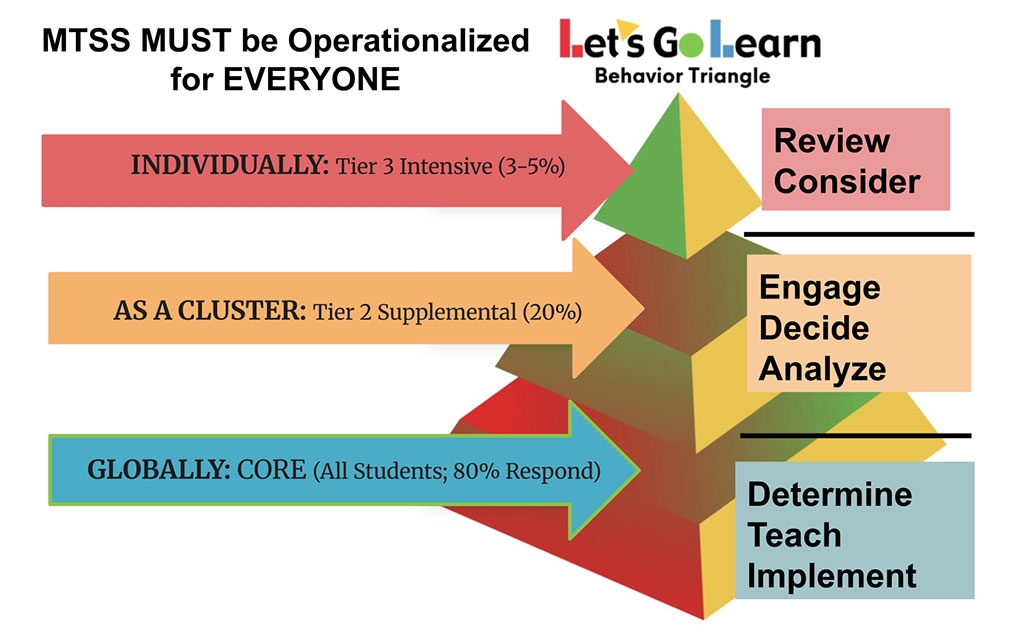
LGL’s Behavior System Technology: BEAM
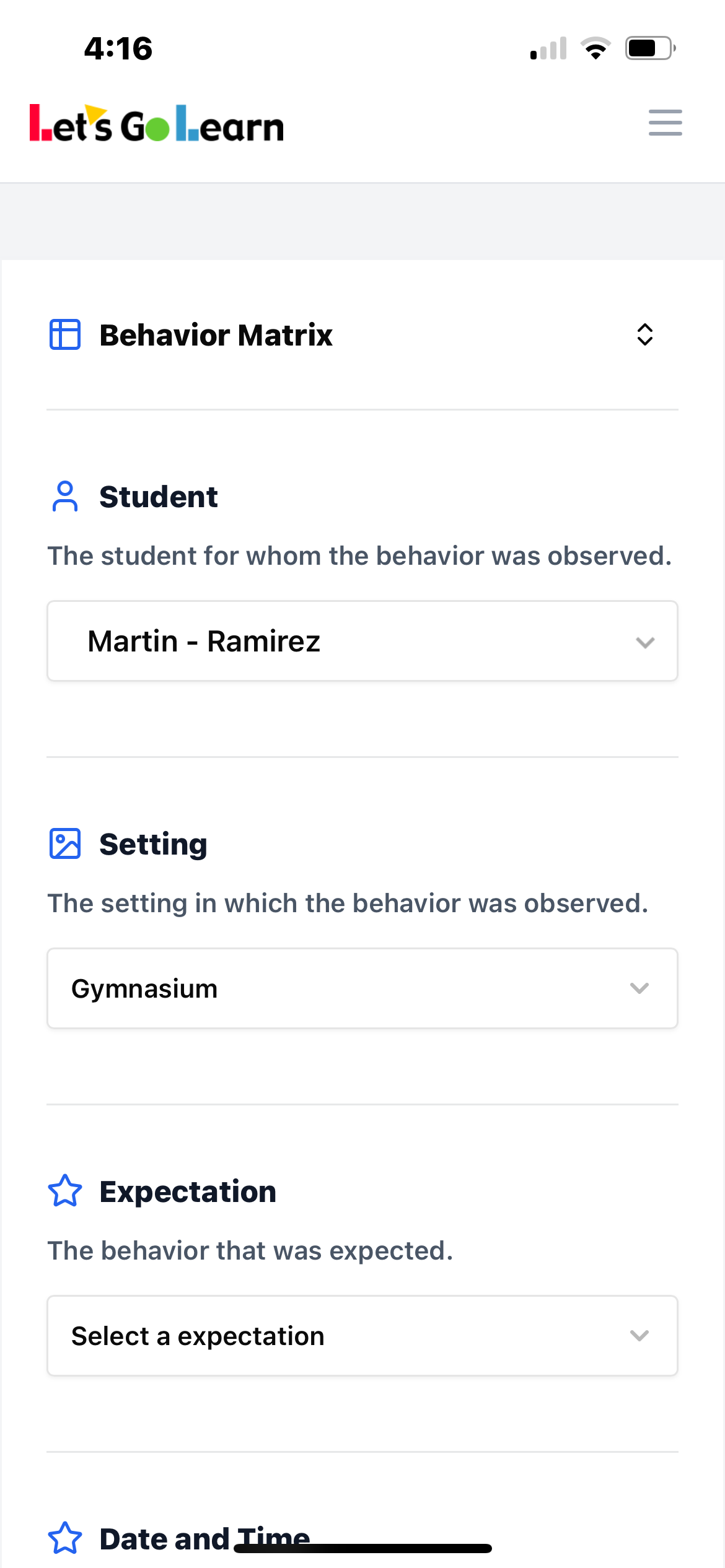
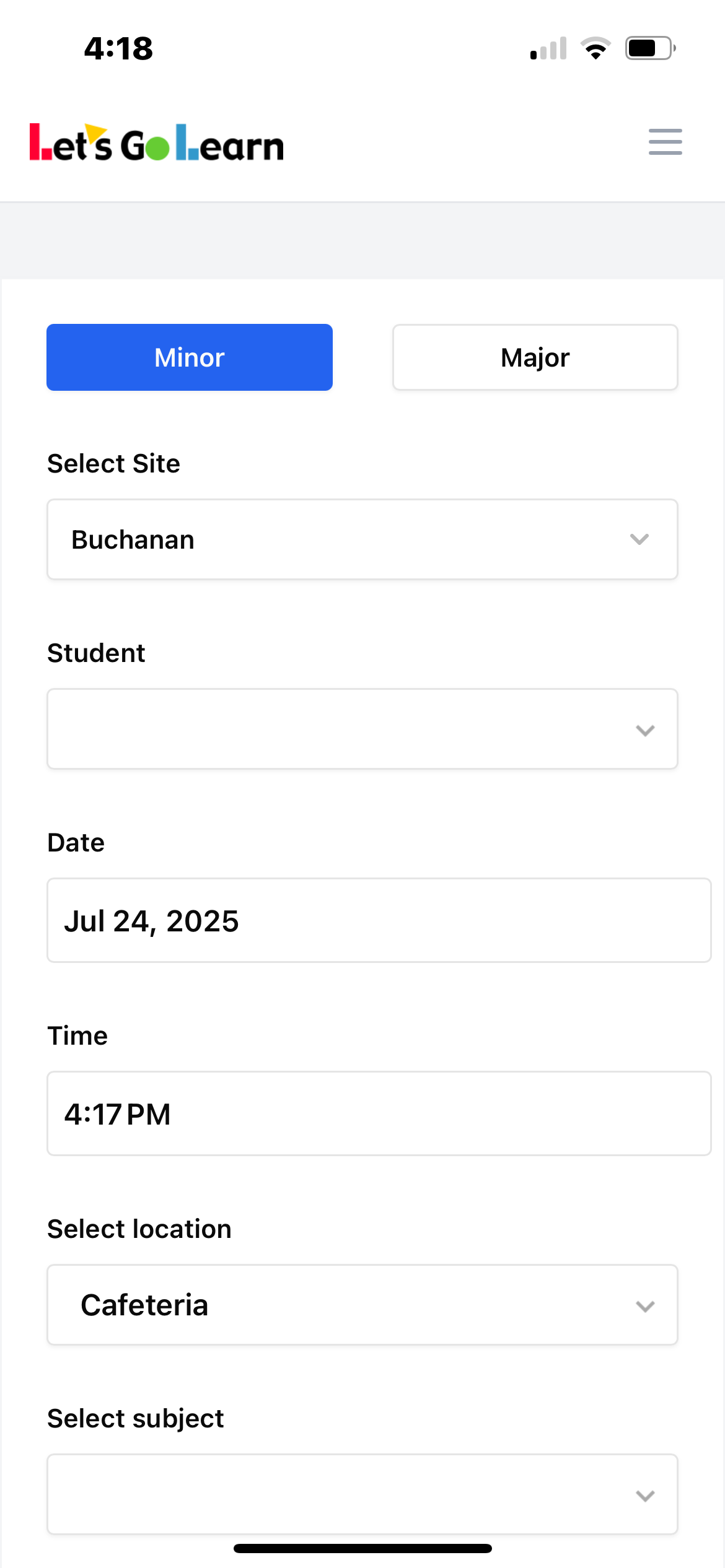
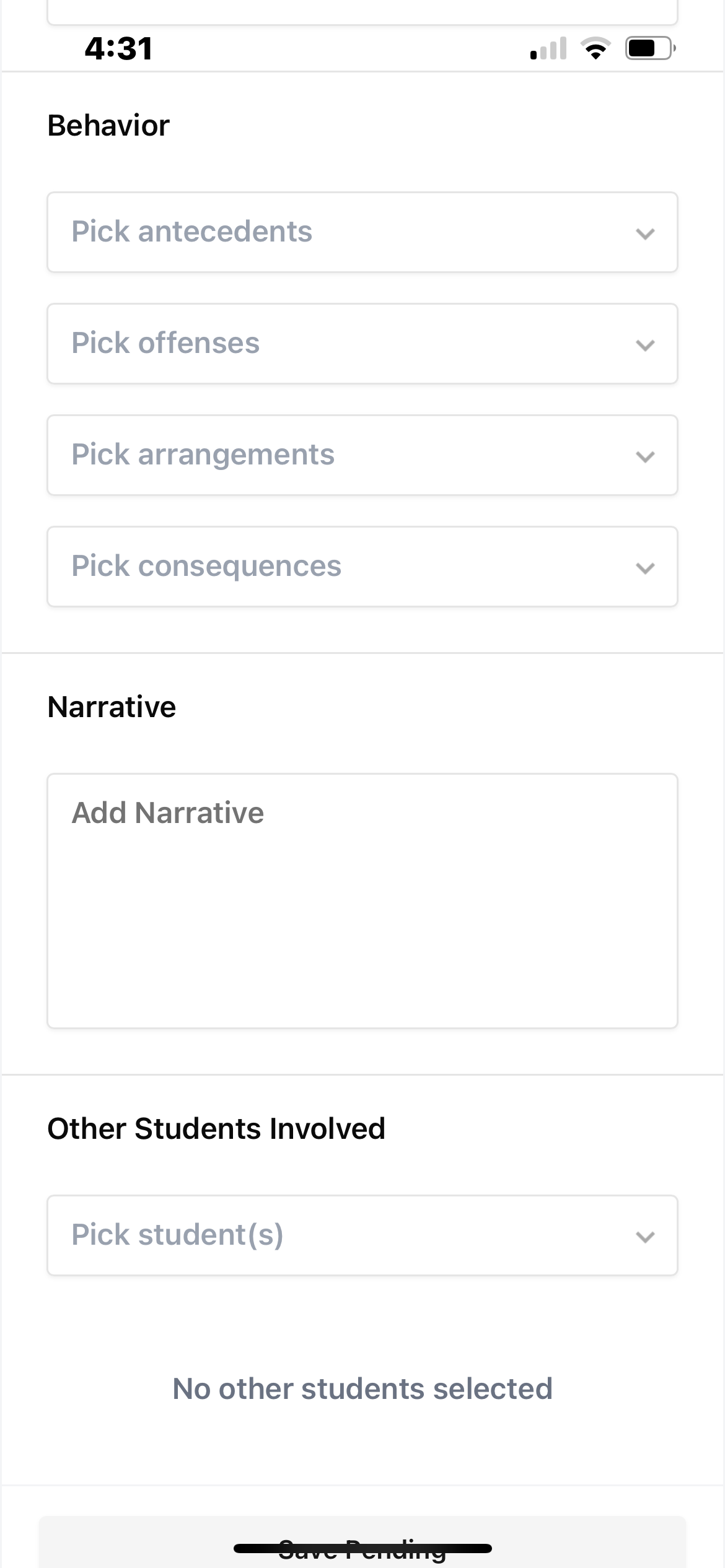
The technology component of our system is called BEAM, Behavior Evaluation And Monitoring. This technology component allows schools and districts to use what they learned and to easily collect data on students. Whether it is for students with a behavior intervention plan (BIP) in tiers 2 or 3 or for any general student who may demonstrate an unexpected behavior, the idea is to make data collection easy and natural. Teachers or staff will use a mobile phone app to easily collect data any time during a student’s interaction with their school. This data collection model, made easy, can flag students experiencing difficulties proactively. A strong core can prevent minor behavior incidents from becoming issues in the first place.
The Power of Prevention: Building Strong Behavior Systems
This three-part CASE webinar series explores how school and district leaders can take a proactive, data-driven approach to behavior within an MTSS framework. Through engaging sessions, viewers will learn how to evaluate current behavior systems, build effective Behavior Problem-Solving Teams, and use real-time data to guide decision-making. Each session features insights into Let’s Go Learn’s Core Behavior Assessment Tool and its role in supporting prevention-focused strategies that lead to lasting student success. Whether you’re just getting started or looking to strengthen your existing framework, this series provides the foundation to take action confidently.

Mobile Screenshots


Additional LGL Resources
Listen to our podcast, Accelerating Education, and a discussion about behavior, with Dr. Angela Bost. In this enlightening conversation, Dr. Bost, a former Deputy Superintendent of a large school district, discusses the critical intersection of behavior management and academic performance in schools. She emphasizes the need for a proactive approach to student behavior, integrating it with academic support systems to improve overall student outcomes. Dr. Bost shares insights on the challenges faced by educators in addressing behavior issues, the importance of a strong behavior framework, and the role of technology in assessing and monitoring student behavior. The discussion highlights the necessity for districts to develop a comprehensive behavior core and the support needed to operationalize it effectively.

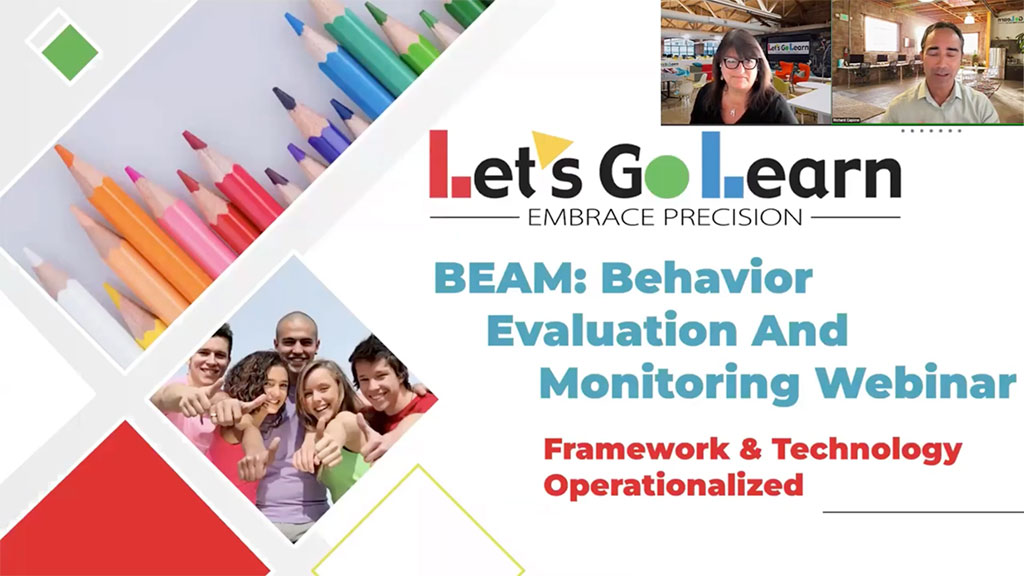
Discover how Let’s Go Learn is transforming behavior support in schools with the launch of BEAM — Behavior Evaluation and Monitoring, our brand-new technology solution for student behavior monitoring and data-driven intervention. In this 30-minute webinar, Amy Dupree, Director of Partnership Success, and Richard Capone, CEO and Co-founder of Let’s Go Learn, walk you through:
✅ Our proven behavior program support strategies
✅ A live demo of BEAM’s powerful features
✅ How BEAM’s mobile app empowers real-time student monitoring
✅ The customizable dashboard for data analysis based on your role
✅ How BEAM streamlines communication between staff and improves outcomes
Whether you’re a district leader, school counselor, behavior specialist, or classroom teacher, this solution is built with you in mind.
FAQ
What if we already are using a behavior system?
Is this system evidence-based or research-supported?
References
Canning, E. A., Muenks, K., Green, D. J., & Murphy, M. C. (2019). STEM faculty who believe ability is fixed have larger racial achievement gaps and inspire less student motivation in their classes. Science Advances, 5(2), Article eaau4734
Dweck CS, Yeager DS. Mindsets: A View From Two Eras. Perspect Psychol Sci. 2019 May;14(3):481-496. doi: 10.1177/1745691618804166. Epub 2019 Feb 1. PMID: 30707853; PMCID: PMC6594552.
Dweck CS (2006). Mindset: The new psychology of success. New York, NY: Random House. [Google Scholar]
Dweck CS (2017). From needs to goals and representations: Foundations for a unified theory of motivation, personality, and development. Psychological Review, 124, 689–719. doi: 10.1037/rev0000082 [DOI] [PubMed] [Google Scholar]
Dweck CS, Chiu C, & Hong Y (1995). Implicit theories and their role in judgments and reactions: A world from two perspectives. Psychological Inquiry, 6, 267–285. doi: 10.1207/s15327965pli0604_1 [DOI] [Google Scholar]
Dweck CS, & Leggett EL (1988). A social-cognitive approach to motivation and personality. Psychological Review, 95, 256–273. doi: 10.1037/0033-295X.95.2.256 [DOI] [Google Scholar]
Dweck CS, & Reppucci ND (1973). Learned helplessness and reinforcement responsibility in children. Journal of Personality and Social Psychology, 25, 109–116. doi: 10.1037/h0034248 [DOI] [Google Scholar]
Marzano, R. J., Pickering, D. J., & Pollock, J. E. (2001). Classroom instruction that works: Research-based strategies for increasing student achievement. Alexandria, VA: Association for Supervision and Curriculum Development.
Marzano, R. J. (2009). Setting the Record Straight on “High-Yield” Strategies. Phi Delta Kappan, 91(1), 30-37. https://doi.org/10.1177/003172170909100105 (Original work published 2009)
Moser, J. S., Schroder, H. S., Heeter, C., Moran, T. P., & Lee, Y.-H. (2011). Mind your errors: Evidence for a neural mechanism linking growth mind-set to adaptive posterror adjustments. Psychological Science, 22, 1484–1489.
https://doi.org/10.1177/0956797611419520
Paunesku, D., Walton, G. M., Romero, C., Smith, E. N., Yeager, D. S., & Dweck, C. S. (2015). Mind-set interventions are a scalable treatment for academic underachievement. Psychological Science, 26, 784–793.
https://doi.org/10.1177/0956797615571017
Yeager, D. S., Hanselman, P., Walton, G. M., Murray, J. S., Crosnoe, R., Muller, C., … Dweck, C. S. (2019). A national experiment reveals where a growth mindset improves achievement. Nature, 573, 364–369.
https://doi.org/10.1038/s41586-019-1466-y