
How to Prepare Students for Real Life: The Framework Schools Are Turning to
Top 3 Key Takeaways
- Preparing students for real life requires intentional instruction in daily living, communication, digital safety, career readiness, and self-management, not just academic achievement.
- LCE 2.0 provides a comprehensive, updated framework that supports the development of independence and real-world competence, all within a flexible system that schools can adapt to any setting.
- Let’s Go Learn powers LCE with technology, assessments, and teacher-ready tools that make high-quality life skills instruction practical, consistent, and data-informed across a district.
Why Schools Need a Real-Life Readiness Framework

Many young adults are telling us—loudly—that the transition into adulthood feels harder, more expensive, and more uncertain than it did for prior cohorts. For example, in Pew Research Center’s national study of young adults ages 18–34, only 45% say they’re completely financially independent from their parents, and 44% say they received financial help from parents in the past year. Schools across the country are facing a challenge. Many students are entering adulthood without the life skills needed to navigate work, education, community participation, and daily living. Shifts in technology, communication, workforce demands, and digital safety have widened the gap between what students learn in school and what they must know after graduation.
Educators understand that academic achievement alone is not enough. Students need structured lessons in problem solving, communication, financial literacy, personal safety, digital citizenship, career exploration, and self-advocacy. These are not optional skills. They are essential for independence and long-term well-being.
This is why schools are increasingly turning to Life Centered Education (LCE) 2.0, a modern framework developed by the Council for Exceptional Children (CEC) and the Division on Career Development and Transition (DCDT). LCE 2.0 outlines the specific skills students need to successfully live, learn, and work in today’s world.
Explore more topics in special education
A Comprehensive Framework for Real-Life Success
LCE 2.0 organizes real-life readiness into three domains that mirror the responsibilities students will encounter as adults:
1. Community Living
This domain includes personal hygiene, safety, financial management, communication skills, digital literacy, food preparation, and transportation. These updated competencies reflect real challenges students face today, such as managing online privacy, identifying fraudulent activity, planning meals, and navigating public transportation.
Examples include:
- Digital Communication and Etiquette (DCE1–DCE7)
- Budgeting and Financial Planning (BFPA1–BFPA9)
- Emergency Preparedness (EP1–EP6)
- Public Transportation Navigation (PTN1–PTN10)
2. Employment
Students learn about job exploration, workplace communication, conflict resolution, and the steps required to pursue, obtain, and maintain employment. Lessons help students understand workplace expectations, identify their strengths, and develop essential soft skills that employers consistently identify as critical.
Skills include:
- Identifying employment interests and aptitudes
- Job search strategies
- Interview preparation
- Workplace readiness and professional behavior
- Long-term career development
3. Postsecondary Education
LCE 2.0 gives students tools to succeed academically, socially, and emotionally in postsecondary settings. The curriculum covers study skills, emotional management, self-advocacy, safety on campus, accessing support services, and decision making.
Why LCE 2.0 Meets Today’s Needs
LCE 2.0 is intentionally updated to reflect modern life. Schools are no longer preparing students for the world of 10 or 20 years ago. They are preparing them for a world shaped by digital communication, information security, evolving workplace demands, and increasing expectations for independence.
Some of the most relevant updates include:
- Expanded digital safety content, such as identity theft prevention and privacy settings
- Greater focus on emotional wellness and mental health routines
- Workplace dynamics that reflect contemporary job environments
- Modern financial management skills, including credit building, online banking, and fraud monitoring
- Increased emphasis on self-advocacy and self-awareness
Students encounter these challenges daily. LCE 2.0 ensures that they learn how to navigate them confidently.
Online tools for special education
How Let’s Go Learn Powers Real-Life Preparation
Let’s Go Learn supports the LCE 2.0 framework by transforming it into a teacher-friendly digital experience that works in any classroom. Through powerful technology and adaptive assessments, schools can teach life skills with clarity, consistency, and data-driven precision.
Tools Educators Gain Through Let’s Go Learn
- Access to every LCE lesson with teacher scripts, objectives, differentiation options, and UDL supports
- The ability to assign pre- and post-quizzes for each sub-competency
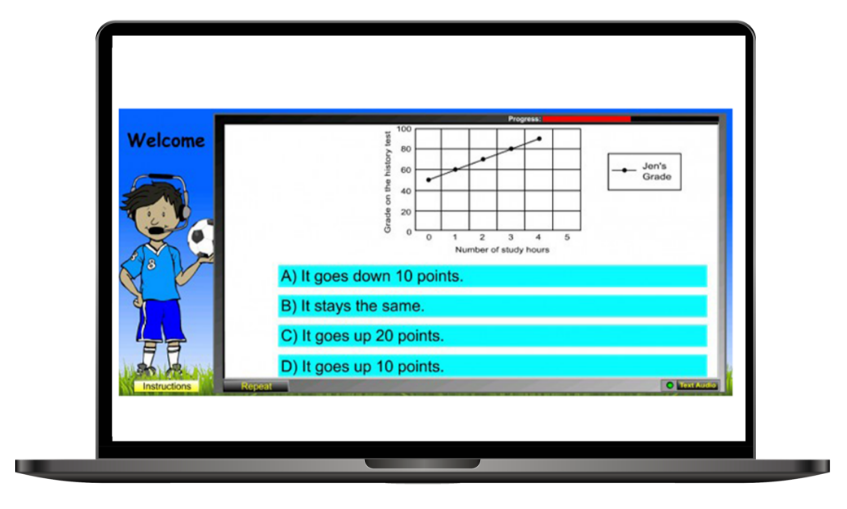
- A modern testing engine with audio voice-over and randomized choices
- An AI assistant trained specifically in LCE content
- Rostering and SIS integration
- A data portal for IEP writing, goal tracking, and reporting
The Role of Diagnostics in Preparing Students for Real Life
Academic strengths and gaps directly influence how well students can apply real-life skills. Let’s Go Learn’s diagnostic assessments help educators understand the academic factors affecting independence.
DORA provides insight into vocabulary, comprehension, spelling, and phonics. Weaknesses in these areas may impact a student’s ability to complete job applications, understand safety instructions, or advocate for themselves.
ADAM identifies foundational skills needed for budgeting, financial decision-making, measurement, and numerical reasoning.
By pairing LCE with these diagnostics, educators can support the whole student academically and functionally.
Let's Go Learn's diagnostic assessments
With Let’s Go Learn, you can create personalized instruction that inspires success for each learner, as you differentiate curriculum for intervention, remediation, and enrichment.
Why Schools Are Adopting LCE 2.0
Educators appreciate that LCE 2.0:
- Is grounded in research and high-leverage instruction
- Is flexible enough to fit any instructional setting
- Provides clear, comprehensive teaching tools
- Focuses on the real-life challenges students must master
- Helps schools meet federal transition requirements
- Improves communication with families through measurable objectives
- Supports independence, confidence, and long-term success for students
District leaders value its ability to standardize high-quality transition instruction across campuses while still allowing for personalization. Teachers value its clarity and structure. Families value its focus on meaningful adult outcomes.
Helping Students Live, Learn, and Work Independently
Preparing students for real life requires more than hope. It requires a system that teaches, measures, and supports the skills that matter most for adulthood. LCE 2.0, powered by Let’s Go Learn, provides schools with that system. It gives educators vital tools to help every student build the confidence, competence, and independence necessary for a fulfilling adult life.
Math Diagnostic Assessments
Powerful diagnostics from foundational math through algebra.