
Special Education

Special education students with disabilities need research-based tools for assessment, instruction, and progress monitoring. Diagnostic assessments should analyze each individual child’s standards-based learning gaps and present levels (PLAAFP). Education technology, or edtech, can be used to develop individualized education programs (IEPs) using narratives and standards-based data. A successful SPED curriculum is delivered using diagnostic assessments to assign specially designed instruction (SDI) for students with disabilities at the appropriate zone of proximal development (ZPD). This enables personalized, adaptive instruction to help students with disabilities become successful learners. As instruction progresses, standards-based formative assessments are used to provide progress monitoring, tracking student performance from the initial evaluation.

Edtech is an effective way of providing assessment, instruction, reporting, and narratives for classroom teachers and parents of students with disabilities.

On this page, Let’s Go Learn and its partners provide a library of blog articles to offer special education assessment and instruction strategies and best practices for everyone from professional educators and teachers, to tutors and homeschool parents. We welcome your comments.
What Is Transition? A Clear Guide for Educators

What Is Transition? A Clear Guide for Educators Top 3 Key Takeaways Transition is about outcomes, not just compliance: It prepares students with disabilities for life after school–employment, education, and independent living. Effective transition planning starts early and is data-driven: Strong assessments and individualized planning lead to better post-school success. Modern tools like

By |2026-04-01T20:13:41+00:00April 1st, 2026|Special Education|0 Comments

Using AI to Strengthen IEP Workflows for Special Education Teachers

Using AI to Strengthen IEP Workflows for Special Education Teachers Top 3 Key Takeaways AI reduces IEP workload by automating data collection and analysis, progress monitoring, reporting, and draft writing. Good data needs to feed AI for it to accurately support teachers in developing accurate IEPs and goals for each student. AI-powered platforms

How to Write a Strong IEP Plan Using Real Data

How to Write a Strong IEP Plan Using Real Data Top 3 Key Takeaways High-quality IEPs begin with accurate, student-specific data, not guesswork. LGL’s adaptive diagnostics provide precise present levels to anchor goals. Using the full range of DORA and ADAM sub-tests helps educators write goals that truly match student needs, especially when

By |2026-04-08T19:28:42+00:00March 19th, 2026|Artificial Intelligence (AI), Special Education|Comments Off on How to Write a Strong IEP Plan Using Real Data

Common IEP Mistakes

Common IEP Mistakes Top 3 Key Takeaways IEP goals often fail when they are vague, not measurable, or not aligned to true present levels of performance (PLAAFPs). High-quality diagnostic data—such as the data produced by DORA and ADAM—helps educators write accurate, standards-aligned, skill-specific goals. Ongoing data monitoring ensures that instruction stays responsive and

By |2026-04-08T19:28:55+00:00March 18th, 2026|Artificial Intelligence (AI), Special Education|Comments Off on Common IEP Mistakes

How to Create an Effective Individualized Education Program

How to Create an Effective Individualized Education Program (IEP) Top 3 Key Takeaways Effective IEPs begin with high-quality diagnostic data that clearly defines a student’s present levels of performance (PLAAFP). Tools like DORA and ADAM provide granular, skill-level insights that strengthen goal-setting. Goals must be measurable, standards-aligned, and instructionally meaningful, allowing teachers to

By |2026-03-17T19:20:44+00:00March 17th, 2026|Special Education|Comments Off on How to Create an Effective Individualized Education Program

How to Prepare Students for Real Life: The Framework Schools Are Turning to

How to Prepare Students for Real Life: The Framework Schools Are Turning to Top 3 Key Takeaways Preparing students for real life requires intentional instruction in daily living, communication, digital safety, career readiness, and self-management, not just academic achievement. LCE 2.0 provides a comprehensive, updated framework that supports the development of independence and

By |2026-03-03T21:25:03+00:00March 3rd, 2026|Special Education|Comments Off on How to Prepare Students for Real Life: The Framework Schools Are Turning to

Before IDEA: The Fight for School Access and Why 50 Years of the Law Matters

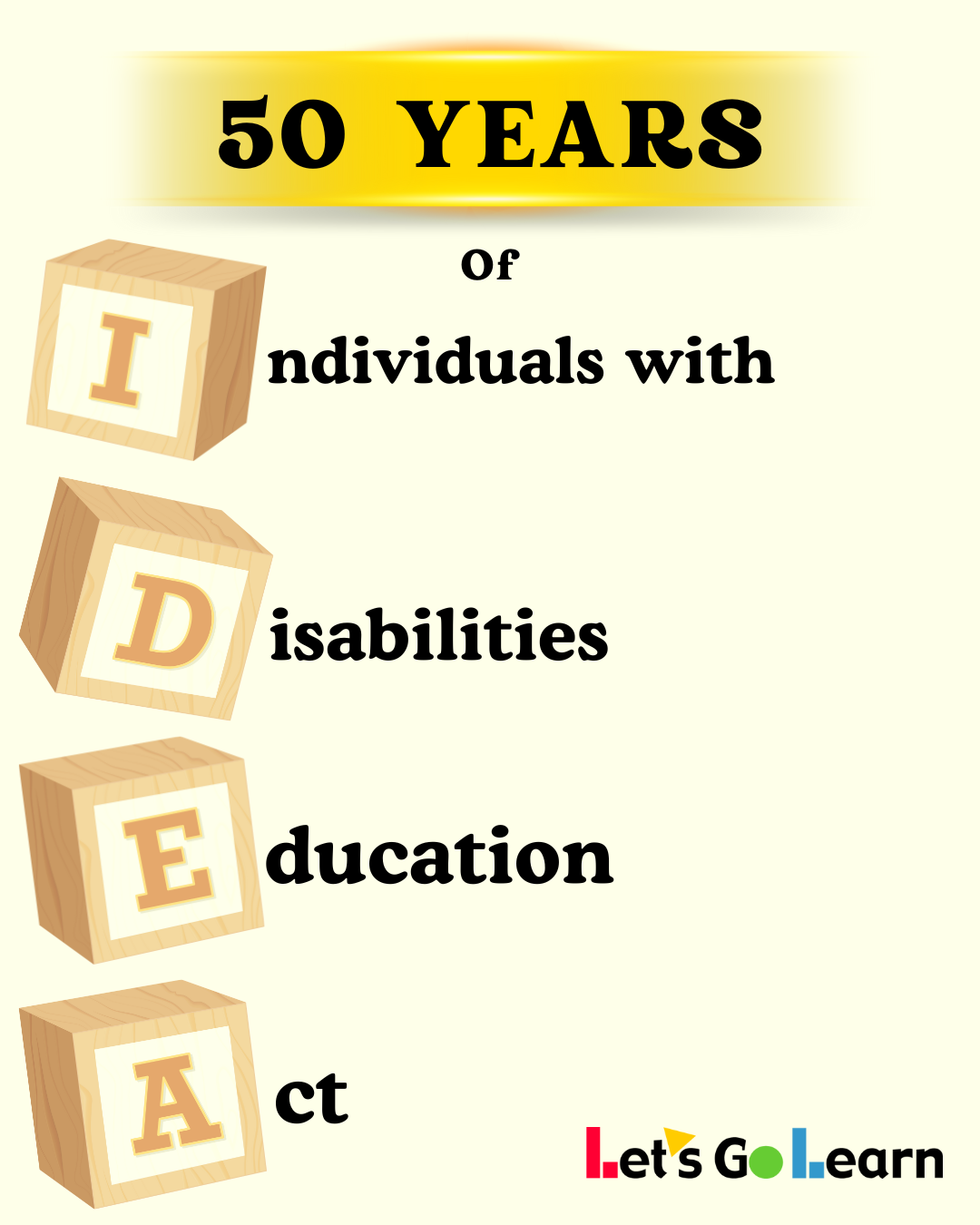
Before IDEA: The Fight for School Access and Why 50 Years of the Law Matters Currently, there is a lot of discussion surrounding the Department of Education, the challenges facing schools, and the state of special education across the country. Many people do not realize that the Individuals with Disabilities Education Act (IDEA)

By |2025-12-01T23:27:25+00:00December 1st, 2025|Special Education|Comments Off on Before IDEA: The Fight for School Access and Why 50 Years of the Law Matters

The AI Debate: Finding Our Common Ground in K-12 Special Education

The AI Debate: Finding Our Common Ground in K-12 Special Education By Richard Capone, CEO of Let's Go Learn https://asteriskmag.substack.com/p/common-ground-between-ai-2027-and?publication_id=2291516&post_id=178644398&triggerShare=true&isFreemail=true&r=1pg6hh&triedRedirect=true I've been following the current AI debate closely. It’s fascinating, and a little unnerving, to watch two camps take such divergent views on the technology's future. One side sees the dawn of a

By |2025-11-18T19:51:08+00:00November 17th, 2025|Special Education|Comments Off on The AI Debate: Finding Our Common Ground in K-12 Special Education

Empowering Student Transitions with LCE 2.0: Let’s Go Learn’s Next Generation Life Skills Curriculum

Empowering Student Transitions with LCE 2.0: Let’s Go Learn’s Next Generation Life Skills Curriculum Top 3 Key Takeaways LCE 2.0 bridges academic learning and real-world transition skills to prepare students for life after high school. Personalized, data-driven instruction empowers educators to meet each student's unique transition goals. Let’s Go Learn’s LCE 2.0 aligns

By |2025-11-18T19:48:49+00:00November 12th, 2025|Special Education|Comments Off on Empowering Student Transitions with LCE 2.0: Let’s Go Learn’s Next Generation Life Skills Curriculum

AI in Special Education

AI in Special Education 1. Personalized Learning Pathways When paired with diagnostics and teacher input, AI can help teachers identify the exact sub-skills a student needs next. For example, if a student struggles with Numbers and Operations in math, AI can flag which building blocks—such as place value or fractions—should be the focus.

By |2025-09-29T19:02:36+00:00September 19th, 2025|Special Education|Comments Off on AI in Special Education
Go to Top