

Before IDEA: The Fight for School Access and Why 50 Years of the Law Matters
Currently, there is a lot of discussion surrounding the Department of Education, the challenges facing schools, and the state of special education across the country. Many people do not realize that the Individuals with Disabilities Education Act (IDEA) is the bedrock that all of these discussions stand upon.
Prior to this landmark law, there was no guarantee that parents could send their children with disabilities to school. This lack of access meant a huge long-term impact on these children and their families, as well as on their communities. The federal implementation of IDEA ensured the fundamental right to a Free Appropriate Public Education (FAPE) for every eligible child with a disability.
We constantly ask the question: Why are special education and the law surrounding it so important? The answer lies in this powerful federal guarantee. Today, while state departments of education primarily manage and implement special education services, the right to FAPE is federally mandated. However, the funding and resource levels needed to fully realize this promise are the subject of ongoing critical discussion and debate.
While we offer an extensive page on Special Education Topics that goes far beyond this article, the law’s historical and present significance warrants a quick, fresh look. We want to redefine it for everyone and highlight its core purpose.
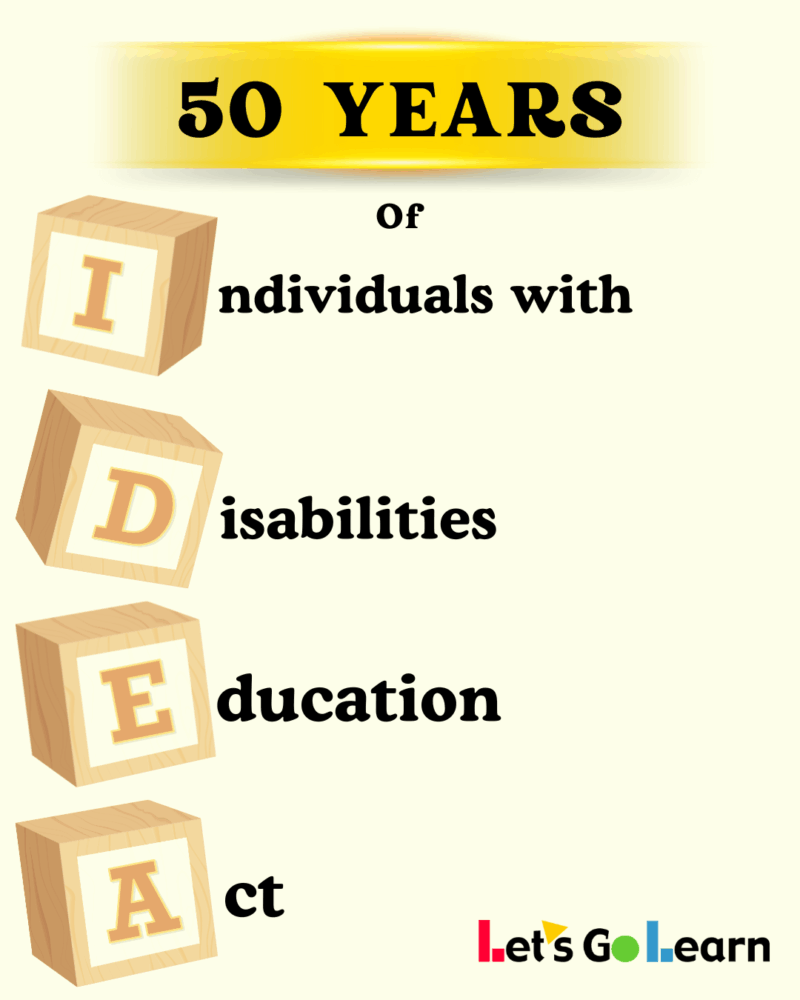
To dive deeper into the nuances and impact of this legislation, we encourage you to explore our comprehensive resources, including our YouTube Playlist on Special Education, which features valuable context and insights. Be sure to watch this especially good video from Stacie Dojonovic, Executive Director of DCDT, for a personal perspective: YouTube Short.
Top 3 Key Takeaways
- IDEA guarantees every eligible student with a disability the right to a Free Appropriate Public Education (FAPE) tailored to their unique needs through an Individualized Education Program (IEP).
- Parents and schools share responsibility for ensuring that students receive appropriate services, support, and accommodations based on data-driven decision-making.
- High-quality diagnostic assessments, such as those from Let’s Go Learn, are vital for creating compliant, effective, and instructionally actionable IEPs.
Understanding the Individuals with Disabilities Education Act (IDEA): What Every Educator and Parent Should Know
The Individuals with Disabilities Education Act (IDEA) is the cornerstone of special education in the United States. First passed in 1975 and reauthorized several times since, IDEA ensures that all students with disabilities have access to a Free Appropriate Public Education (FAPE) that meets their unique needs. For educators, specialists, and families, understanding IDEA is essential for advocating effectively and making sure that students receive equitable learning opportunities.
Online tools for special education
What Is IDEA?
IDEA is a federal law guaranteeing that eligible children with disabilities receive specially designed instruction, accommodations, and related services. It covers students from birth through age 21 and includes 13 disability categories, such as Specific Learning Disabilities, Autism, Emotional Disturbance, Hearing Impairments, and more.
To learn more, visit the official U.S. Department of Education IDEA website:
https://sites.ed.gov/idea/
The Core Principles of IDEA
IDEA is built on several foundational principles:
1. Free Appropriate Public Education (FAPE)
Schools must provide an education tailored to students’ individual needs at no cost to families.
2. Appropriate Evaluation
Assessments must be valid, reliable, nondiscriminatory, and administered by trained professionals.
High-quality adaptive diagnostic assessments like Let’s Go Learn’s DORA (reading) and DOMA (math) help teams gather precise data to support appropriate evaluations:
https://www.letsgolearn.com/solutions/special-education/
3. Individualized Education Program (IEP)
Every eligible student receives an IEP developed collaboratively by educators, specialists, and families. The IEP defines goals, services, accommodations, and progress benchmarks.
4. Least Restrictive Environment (LRE)
Students should be educated alongside nondisabled peers to the maximum extent appropriate.
5. Parent and Student Participation
Families are equal partners in the special education process.
6. Procedural Safeguards
These protect the rights of students and families, ensuring transparency and fairness.
Let's Go Learn's diagnostic assessments
With Let’s Go Learn, you can create personalized instruction that inspires success for each learner, as you differentiate curriculum for intervention, remediation, and enrichment.
Why High-Quality Assessments Matter Under IDEA
Accurate, instructionally actionable data is the backbone of a compliant and effective IEP. IDEA mandates that evaluations:
- Identify areas of need
- Inform goals and services
- Support progress monitoring
Let’s Go Learn provides comprehensive diagnostic tools that support IDEA compliance by pinpointing skill gaps at a granular level. These tools help IEP teams create SMART goals, design individualized interventions, and monitor growth.
Explore Let’s Go Learn’s full suite of special education solutions:
https://www.letsgolearn.com/solutions/special-education/
How IDEA Supports Equity in Education
IDEA helps guarantee that students with disabilities are not overlooked or underserved. By mandating early intervention, inclusive environments, and personalized instruction, IDEA aligns with the broader vision of equitable, student-centered education.
To learn more about early intervention provisions, see the Centers for Disease Control and Prevention (CDC) guide on developmental milestones and early identification:
https://www.cdc.gov/ncbddd/childdevelopment/index.html
Final Thoughts
IDEA remains one of the most powerful laws supporting students with disabilities. When implemented thoughtfully—guided by data, supported by collaboration, and rooted in evidence-based tools—it enables every child to receive an education that honors their potential.
If you’d like help strengthening your school or district’s IDEA compliance through better diagnostics, progress monitoring, and individualized instruction, explore Let’s Go Learn’s research-based solutions:
https://www.letsgolearn.com
