

CASE

Setting Up Transition Education

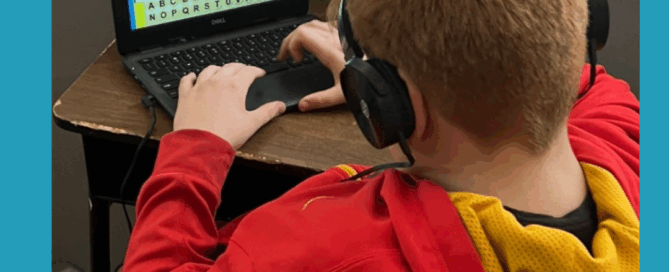
Setting Up Transition Education Special education transition programming (including life skills curriculum) requires a coordinated system that pairs accurate testing with clear, goal-oriented instruction. When launching transition programs at the start of the school year, districts face the practical challenge of establishing accurate baselines across different functional life areas while meeting the requirements


By |2026-10-16T19:34:09+00:00October 16th, 2026|Special Education|Comments Off on Setting Up Transition Education

Equity in Special Education: Policy, Frameworks, and Fiscal Accountability

Equity in Special Education: Policy, Frameworks, and Fiscal Accountability Theoretical Frameworks of Equity versus Equality in Educational Design The division between educational equality and educational equity represents a fundamental tension in school reform and policy design. While these terms are frequently conflated, they constitute very different approaches to resource allocation, instructional delivery,

By |2026-07-27T19:10:37+00:00July 27th, 2026|Uncategorized|Comments Off on Equity in Special Education: Policy, Frameworks, and Fiscal Accountability

The Back-to-School Roadmap: Unifying Screeners and Diagnostic Baselines for Educational Acceleration and Compliance

The Back-to-School Roadmap: Unifying Screeners and Diagnostic Baselines for Educational Acceleration and Compliance The beginning of a new school year presents a recurring challenge for district leaders: how to balance rapid, top-of-funnel risk screening with deep, actionable diagnostic evaluations. Historically, districts have relied on brief, timed screeners—such as one-minute oral reading fluency probes

By |2026-07-27T18:34:02+00:00July 27th, 2026|Math Assessment|Comments Off on The Back-to-School Roadmap: Unifying Screeners and Diagnostic Baselines for Educational Acceleration and Compliance

Child Find and Universal Screening for the 2026-2027 Cycle: Using Comprehensive Diagnostics as an Early Identification Tool for Incoming and Transferring Students

Child Find and Universal Screening for the 2026-2027 Cycle: Using Comprehensive Diagnostics as an Early Identification Tool for Incoming and Transferring Students Top 3 Key Takeaways 1. Misalignment of Standard Screeners: Traditional benchmark tools utilize broad, grade-level-only scaled scores that fail to isolate foundational skill deficits. This leads to weak instructional placement, slow

By |2026-07-27T18:30:08+00:00July 16th, 2026|Education Reform|Comments Off on Child Find and Universal Screening for the 2026-2027 Cycle: Using Comprehensive Diagnostics as an Early Identification Tool for Incoming and Transferring Students

How to Write a Strong IEP Plan Using Real Data

How to Write a Strong IEP Plan Using Real Data Top 3 Key Takeaways High-quality IEPs begin with accurate, student-specific data, not guesswork. LGL’s adaptive diagnostics provide precise present levels to anchor goals. Using the full range of DORA and ADAM sub-tests helps educators write goals that truly match student needs, especially when

By |2026-04-08T19:28:42+00:00March 19th, 2026|Artificial Intelligence (AI), Special Education|Comments Off on How to Write a Strong IEP Plan Using Real Data

Empowering Student Transitions with LCE 2.0: Let’s Go Learn’s Next Generation Life Skills Curriculum

Empowering Student Transitions with LCE 2.0: Let’s Go Learn’s Next Generation Life Skills Curriculum Top 3 Key Takeaways LCE 2.0 bridges academic learning and real-world transition skills to prepare students for life after high school. Personalized, data-driven instruction empowers educators to meet each student's unique transition goals. Let’s Go Learn’s LCE 2.0 aligns

By |2025-11-18T19:48:49+00:00November 12th, 2025|Special Education|Comments Off on Empowering Student Transitions with LCE 2.0: Let’s Go Learn’s Next Generation Life Skills Curriculum

Effective Behavioral Management Techniques for K–12 Schools, Part 2: Building a Sustainable BEAM Framework

Effective Behavioral Management Techniques for K–12 Schools, Part 2: Building a Sustainable BEAM Framework Top 3 Key Takeaways Consistency beats intensity. Sustainable behavioral change comes from consistent data use and calibration—not one-off training days or new acronyms. Data must lead to dialogue. BEAM dashboards spark conversations in PLCs, guiding Tier 1 and Tier

By |2025-10-14T19:25:59+00:00October 14th, 2025|Education Reform|Comments Off on Effective Behavioral Management Techniques for K–12 Schools, Part 2: Building a Sustainable BEAM Framework

Lesson Planning Tips

Lesson Planning Tips Key Takeaways: Start with clear learning objectives – align them with standards and student needs. Incorporate differentiation – adapt your plan to meet varied learning levels. Use technology and assessment tools – track student growth and adjust instruction. Lesson planning is both an art and a science. It provides

By |2025-08-25T18:33:51+00:00August 25th, 2025|Reading Assessment|Comments Off on Lesson Planning Tips

Teachers’ Lesson Planning

Teachers' Lesson Planning Key Takeaways Lesson plans become more effective when broken down into clear, manageable steps. A checklist approach brings consistency, efficiency, and organization to the planning process. Leveraging data-driven tools like Let's Go Learn can streamline planning and improve student outcomes. Lesson planning is at the heart of effective teaching.

By |2025-08-25T17:16:47+00:00August 25th, 2025|Reading Curriculum|Comments Off on Teachers’ Lesson Planning

ESAs & School Vouchers

ESAs & School Vouchers In recent years, educational savings accounts (ESAs) and school voucher programs have emerged as new tools to expand access to high-quality individualized education. These funding options allow families to access additional learning tools for their children, using special financial accounts to choose from a variety of educational providers. Whether

By |2025-07-30T20:09:17+00:00July 30th, 2025|Homeschool|Comments Off on ESAs & School Vouchers
Go to Top